
On June 26-28, 2026, the 8th International Conference on Electronic Engineering and Informatics (EEI 2026) was successfully held in Jinan, the capital city of China. The conference is hosted by Shandong University, co organized by Yanshan University, Anhui University, Linyi University, Liaocheng University, Jinan University, Shandong Normal University, and Qilu University of Technology (Shandong Academy of Sciences), with technical support provided by IEEE Systems, Man, and Cybernetics Society. More than 200 experts, scholars, researchers, and industry elites from domestic and foreign universities and research institutions attended the conference.

The opening ceremony of the conference was presided over by the chairman of the conference, Professor Liu Shuai from Shandong University.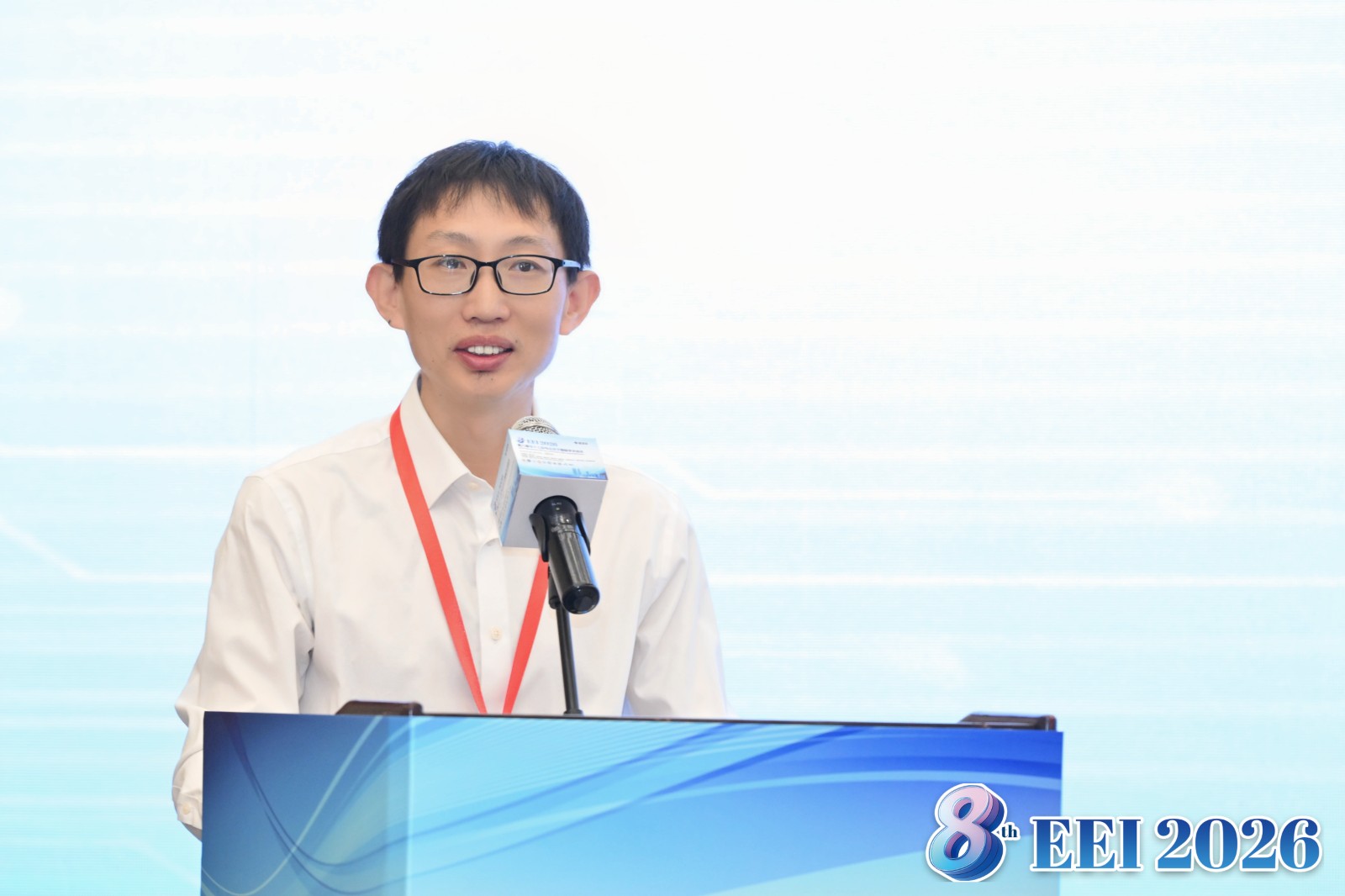
Professor Zhu Dejian, Vice President of Shandong University, delivered a welcome speech, warmly welcoming experts and scholars from home and abroad who came from afar, and introducing Shandong University's profound accumulation and innovative achievements in the fields of electronic engineering and information science. Principal Zhu expressed that the school is willing to take this conference as an opportunity to work with experts and scholars to strengthen academic exchanges, deepen scientific research cooperation, jointly cultivate innovative talents, and promote the transformation of achievements, and work together to promote the integrated development of information science and cutting-edge interdisciplinary fields.

The keynote speech section of the conference was presided over by Professor Zhang Huanshui (IEEE Fellow at Shandong University/Shandong University of Science and Technology), Professor Wang Guangchen (Shandong University), Professor Qiu Jianlong (Vice President of Linyi University), Professor He Shuping (Vice President of Anhui University), and Professor Li Xiaodi (Vice President of Shandong Normal University).

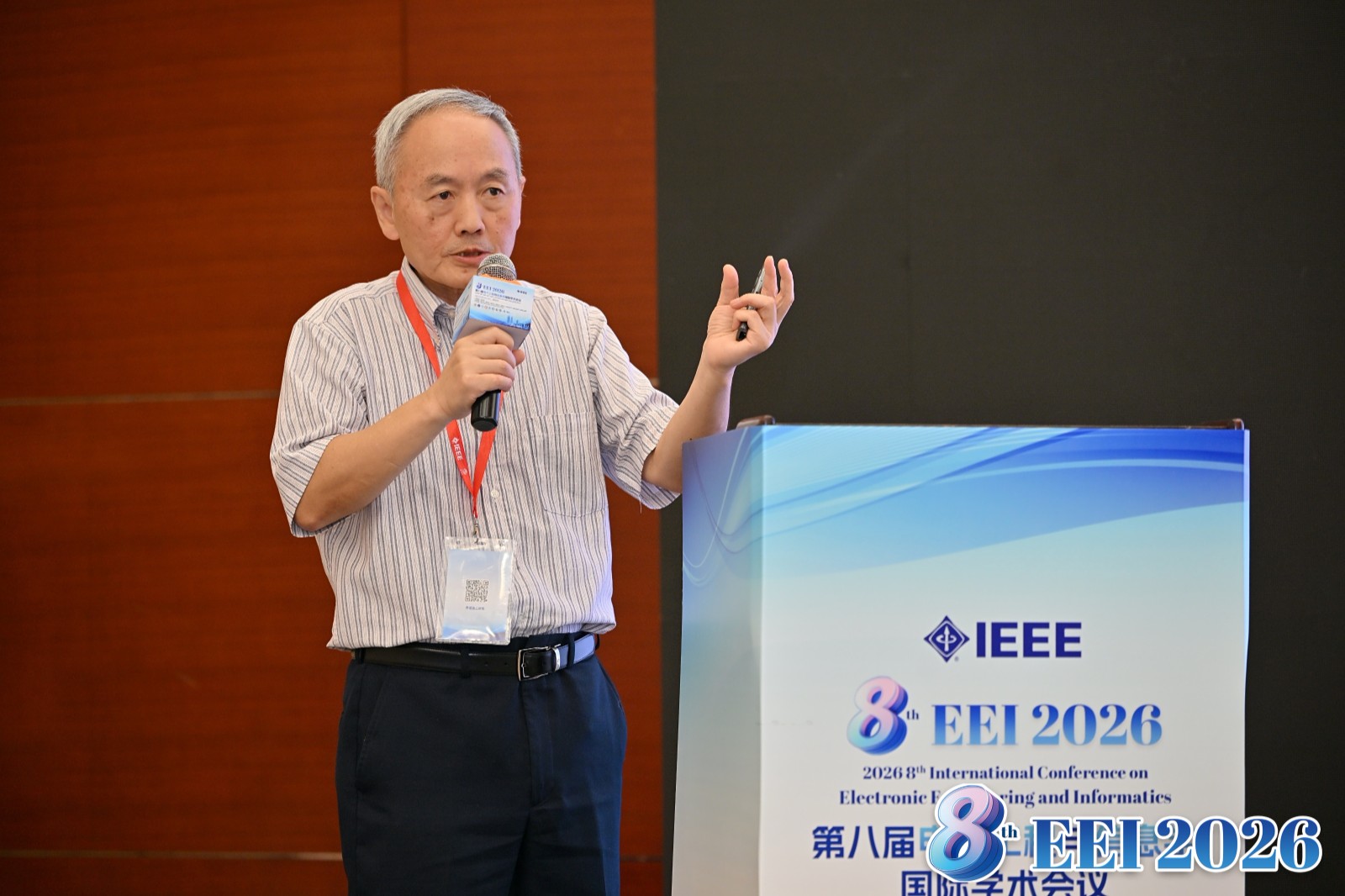
Five well-known scholars from home and abroad have successively appeared: Academician Song Yongduan of Chongqing University (a foreign academician of the Chinese Academy of Engineering and an IEEE Fellow) systematically elaborated on the strategy and practical path of intelligent empowerment of classical PID controllers; Researcher Cheng Daizhan (IEEE/IFAC Fellow) from the Institute of Mathematics and Systems Science of the Chinese Academy of Sciences deeply analyzed the theoretical framework of tensor eigenvalue and Kronecker standard form; Professor Gu Guoxiang (IEEE Fellow) from Louisiana State University in the United States shared the latest achievements in data-driven offline strategy reinforcement learning under packet loss channels; Professor Wang Jun from City University of Hong Kong (IEEE Life Fellow, Foreign Member of the European Academy of Sciences) demonstrated the cutting-edge application of collaborative neurodynamic optimization in intelligent information processing; Professor He Shibo from Zhejiang University (a national high-level talent) gave a wonderful speech on industrial AI and multi-agent systems.
 |  |  |  |  |
In the afternoon, four parallel sub forums were held simultaneously, focusing on hot topics such as "Complex System Optimization and Multi Carrier Intelligent Automation Frontiers" (hosted by Professor He Shuping from Anhui University and Professor Yan Zhiguo from Qilu University of Technology), "Distributed Intelligent Perception and Industrial System Optimization Decision Frontiers" (hosted by Professor Yang Rongni and Professor Wang Xinli from Shandong University), "Intelligent Control and Logic Systems" (hosted by Professor Feng Jun'e from Shandong University and Professor Li Haitao from Shandong Normal University), and "Distributed Optimization and Intelligent Security Control in Complex Dynamic Scenarios" (hosted by Professor Wang Bingchang from Shandong University).
Sub forum 1 (Frontiers of Complex System Optimization and Multi Carrier Intelligent Automation): Professor Zhang Huanshui from Shandong University of Science and Technology shared the application achievements of OCP optimization method in multiple engineering fields; Researcher Wei Qinglai from the Institute of Automation, Chinese Academy of Sciences introduced the latest progress of adaptive dynamic programming around self-learning optimal control; Professor Chen Mou from Nanjing University of Aeronautics and Astronautics gave an in-depth lecture on intelligent decision-making and control technology for heterogeneous high-speed aircraft; Professor He Zhaoshui from Guangdong University of Technology has brought research on acupoint recognition and precise positioning of acupuncture and moxibustion robots; Professor Zhao Xudong from Dalian University of Technology shared the relevant achievements of time driven switching control design for switching systems.
Sub forum 2 (Frontiers of Distributed Intelligent Perception and Industrial System Optimization Decision making): Professor Wen Guanghui from Southeast University discussed distributed optimization and game problems in group embodied intelligent systems; Professor Liu Zhundou from Northwestern Polytechnical University shared on the intelligent navigation and perception technology of multi-source fusion unmanned aerial vehicles; Professor Wang Ziyun from Jiangnan University introduced the exploration of intelligent cognition in manufacturing scenarios and industrial process optimization decision-making; Professor Zhu Yanzheng from Shandong University of Science and Technology systematically reviewed the research progress on anti shake control for switching systems; Assistant Professor Guomeng from Peking University shared his research on verifiable learning planning methods for multi-agent systems.

Sub forum Three (Intelligent Control and Logic Systems): Professor Xia Chengyi from Tianjin University of Technology introduced the research on probabilistic Boolean network control based on reinforcement learning; Qi Hongsheng, a researcher from the Institute of Systems Science, Chinese Academy of Sciences, shared his achievements in Boolean control networks with recursive constraints; Associate Professor Li Yifeng from Chongqing Normal University gave a report on the application of STP in Boolean network interference decoupling and mathematical programming; Professor Li Changxi from Shandong University talked about the research progress of continuous time Markov networks from merging rules to synchronous control; Professor Liu Yang from Zhejiang Normal University introduced a topology evolution logic optimization method based on continuous feasible class reconstruction.
Forum Four (Distributed Optimization and Intelligent Security Control in Complex Dynamic Scenarios): Professor Yang Tao from Northeastern University introduced the latest progress in the field of distributed non convex optimization; Professor Qiu Jianbin from Harbin Institute of Technology shared his research on intelligent perception and autonomous evasion of spacecraft orbit threats; Professor Qin Jiahu from the University of Science and Technology of China gave a report on the perception, decision-making, and control of autonomous drones in complex dynamic environments; Professor Ye Maojiao from Nanjing University of Science and Technology shared the relevant theories of distributed decision-making in node dynamic entry and exit game; Professor Li Yuzhe from Northeastern University exchanged views on risk perception and security regulation of industrial cyber physical systems.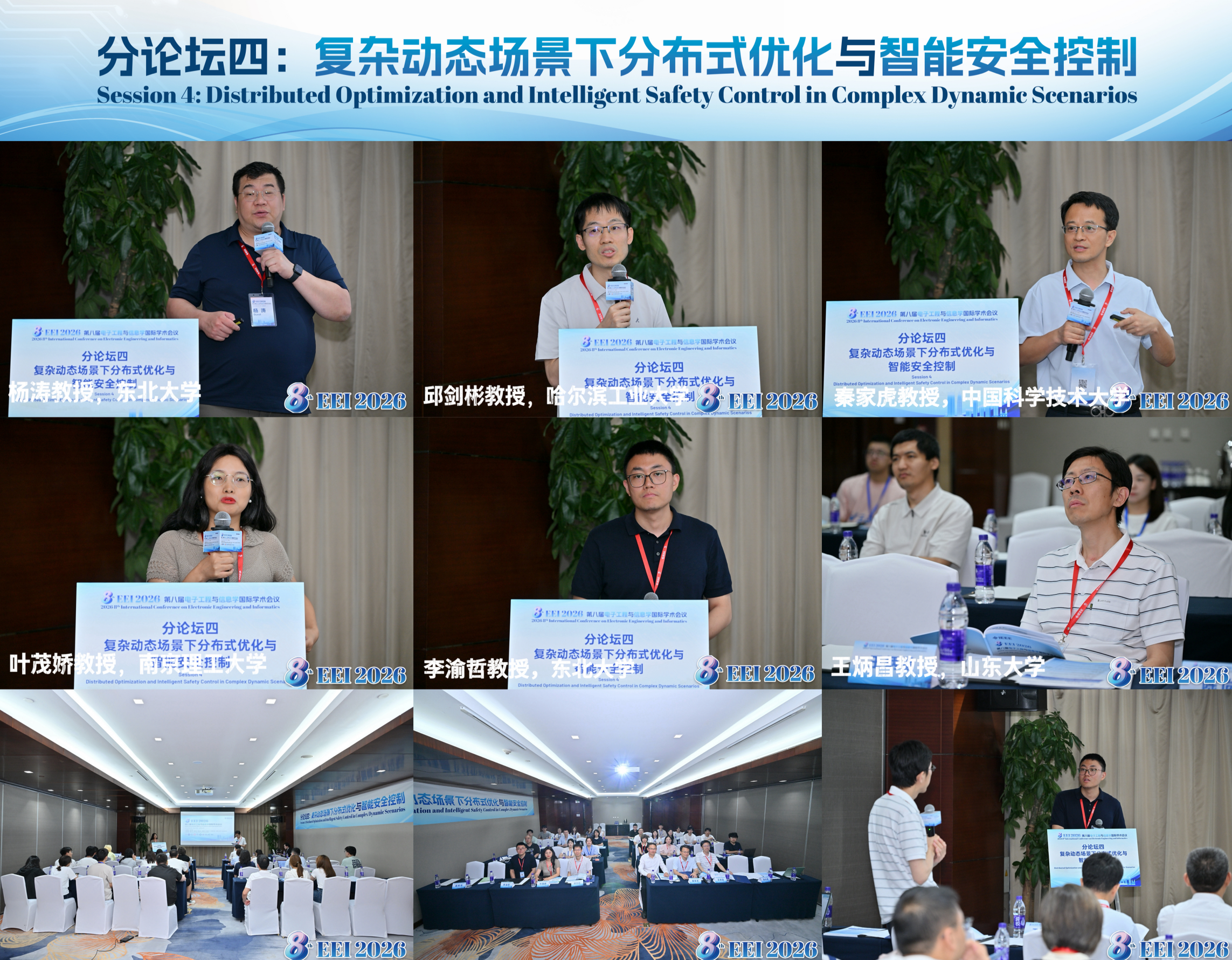
At the same time, each sub forum also features 28 oral presentations and over 30 poster displays, conducting in-depth exchanges on cutting-edge topics such as multi-agent collaboration, MEMS gyroscopes, 4D millimeter wave radar, reinforcement learning PID, and distributed optimization.
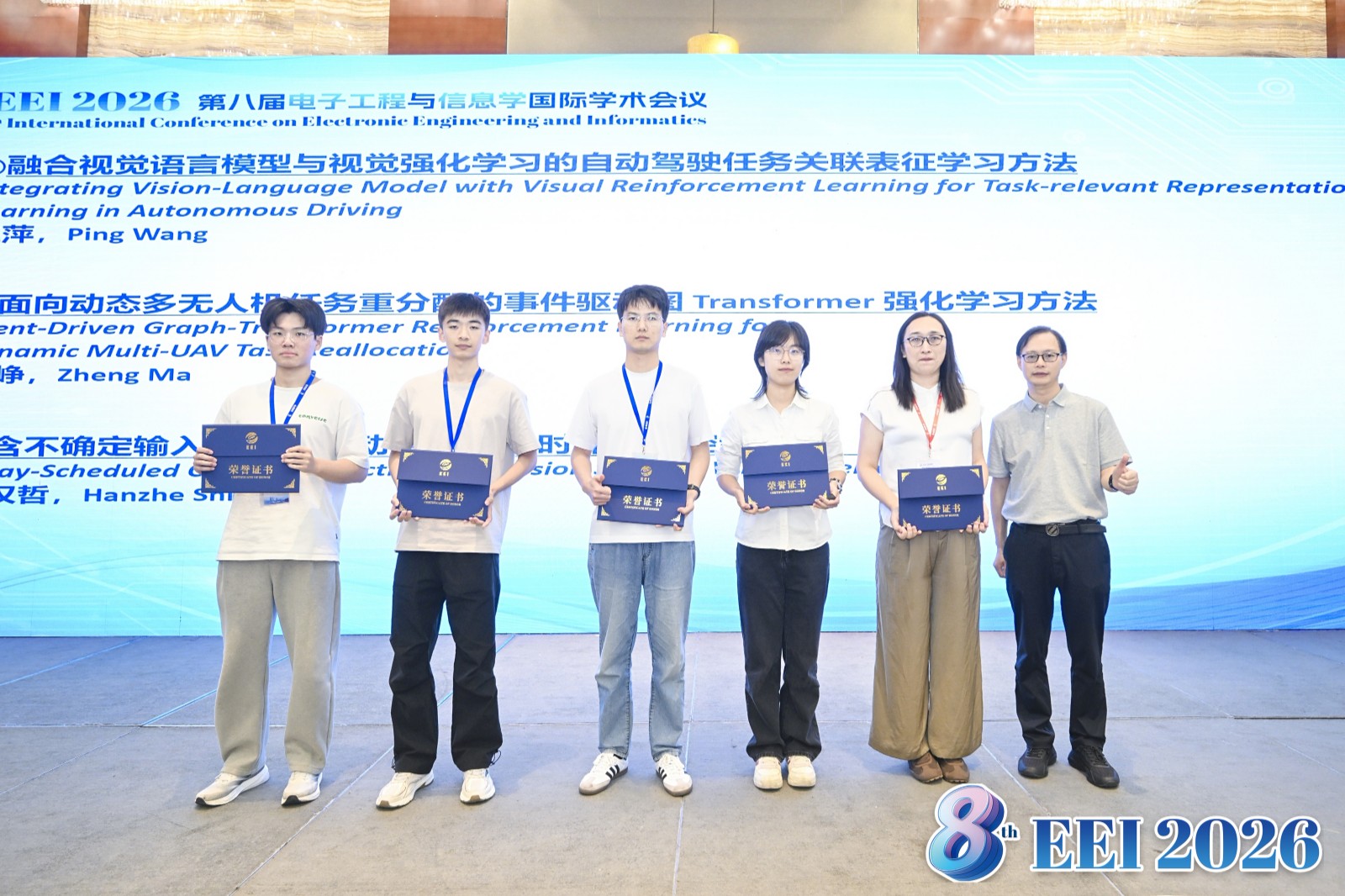
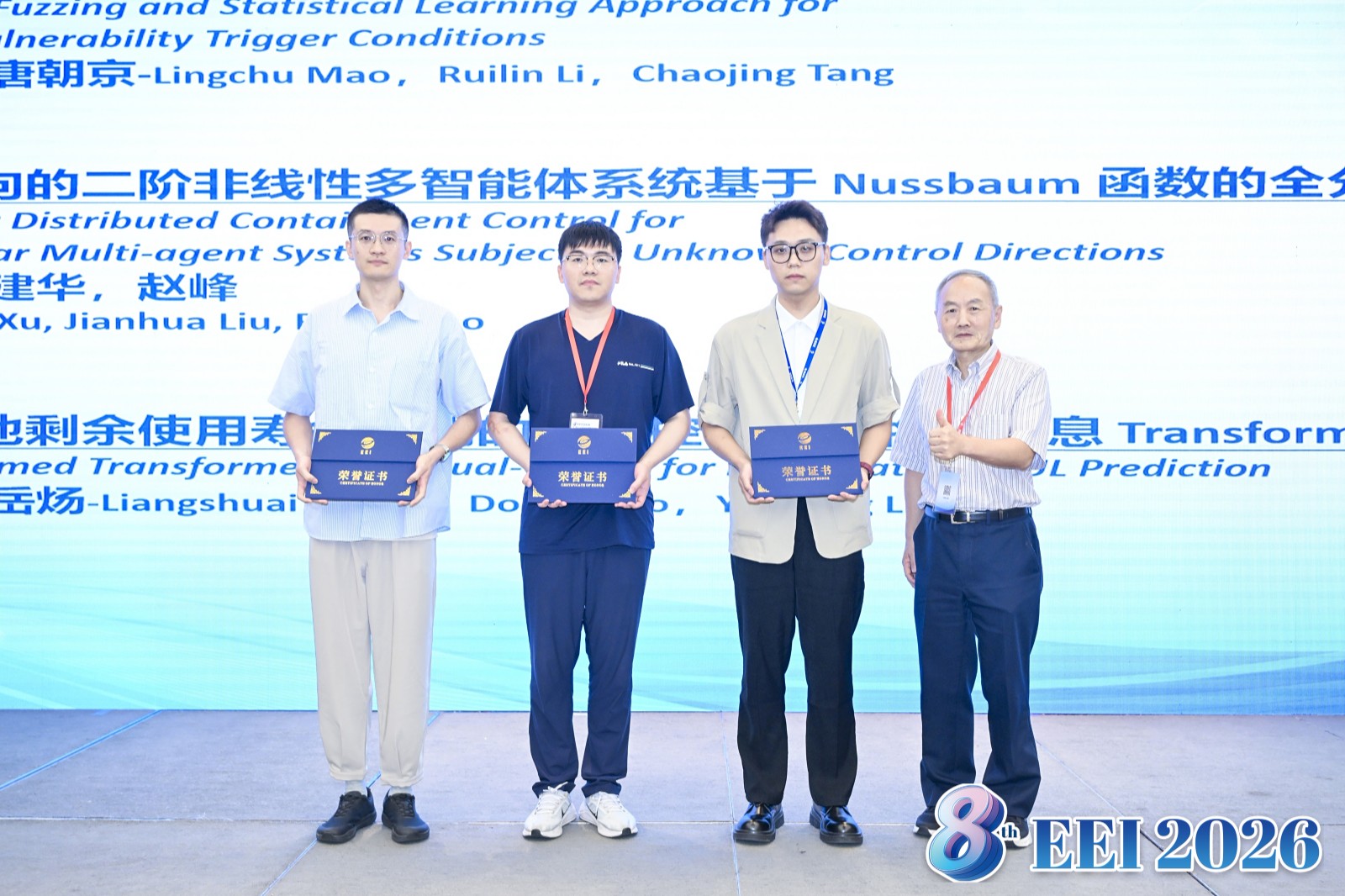
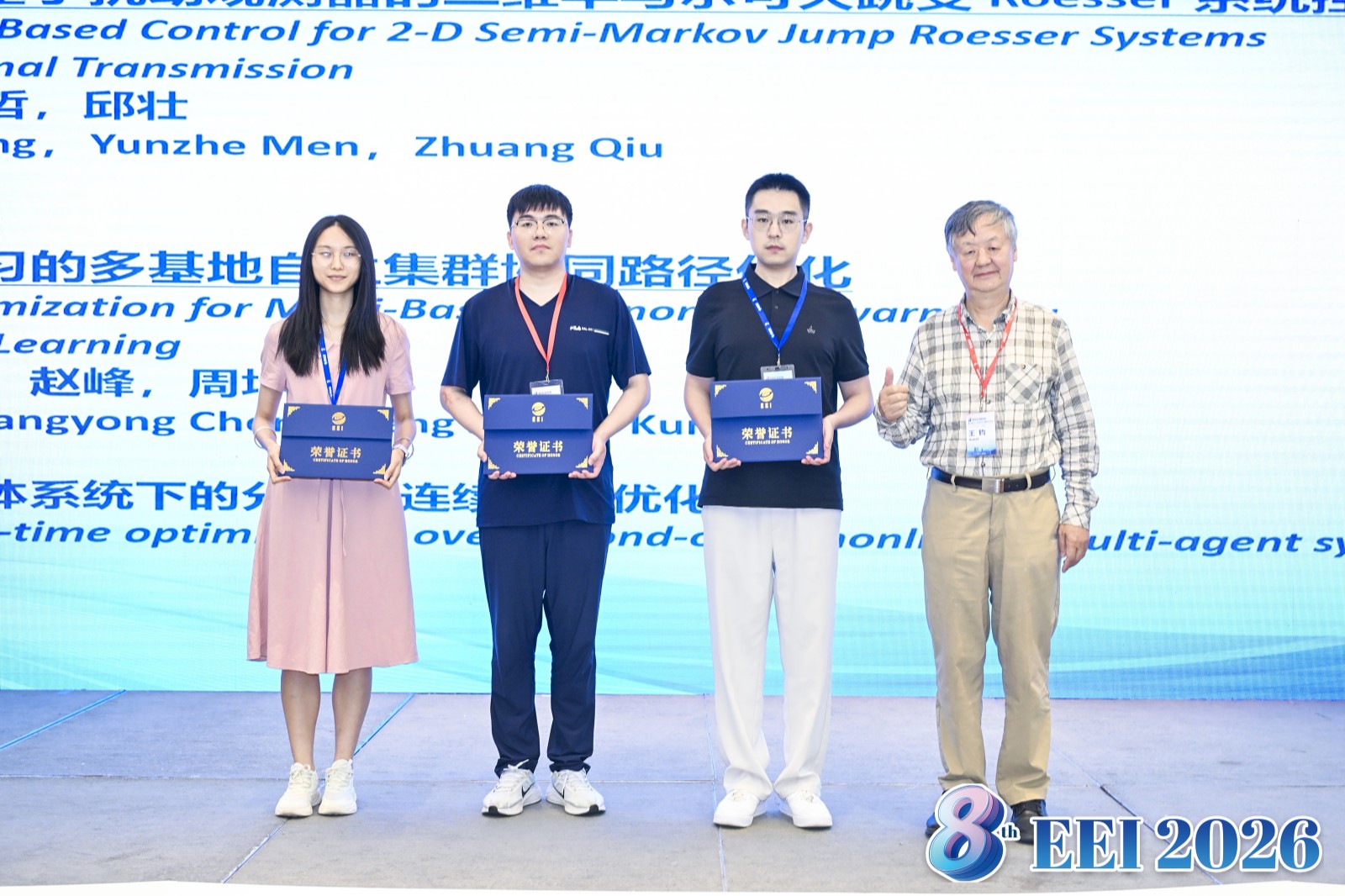
The award ceremony kicked off in a warm and solemn atmosphere, and the conference presented multiple honors including Best Poster Display Award, Best Oral Presentation Award, Best Paper Nomination Award, Best Student Paper Award, Best Paper Award, Outstanding Organizer Award, etc. These awards are comprehensively evaluated based on dimensions such as academic innovation, technological contribution, and report performance, aiming to recognize outstanding scholars and young scientific research talents who have made outstanding contributions in their respective research fields.
 |  |  |
 |  |  |
This conference received over 200 submitted papers and conducted high-level and multi-dimensional academic exchanges and ideological collisions around cutting-edge theories, key technologies, and engineering practices in the fields of electronic engineering and information science through various forms such as keynote speeches, sub forum invited presentations, oral presentations, poster displays, and long abstract displays. The successful holding of the conference has provided a high-level international exchange platform for domestic and foreign scholars, effectively promoting theoretical breakthroughs and technological implementation in the fields of electronic engineering and information science. Looking forward to the EEI series conferences continuing to lead the development of disciplines, and gathering again in Nanjing next year to jointly create a new chapter in electronic engineering and informatics!